Formula 1 has always been a battleground for speed, brilliance and ambition, but in recent years, something deeper has shifted. Teams once held together by passion and persistence now carry billion-dollar price tags. Ownerships have changed, identities have evolved, and the soul of the grid has been reshaped by forces far bigger than racing alone.
This article follows that transformation, from the teams that nearly disappeared to the ones reborn under new flags and asks what it truly means when heritage, money and emotion collide at 300 km/h.
The global racing community has spent the past few years watching Formula 1’s financial metamorphosis with equal parts awe and also disbelief. In what feels like the blink of an eye, a sport once preoccupied with year to year survival now trades in valuations fit for empire-builders.
By the end of 2024, McLaren’s long-running ownership saga snapped into focus. Bahrain’s Mumtalakat and Abu Dhabi’s CYVN Holding joined forces to pull the team out of its maze of private-equity entanglements, forging a single, sovereign-backed powerhouse built for stability and ambition. Meanwhile in Hinwil (Switzerland), a very different chapter is about to be closing for good. Sauber, for decades the poster child of privateer grit, is preparing to retire its identity altogether as the highly anticipated Audi completes its slow-burn takeover. What began as a cautious, multi-phase acquisition tale now stands ready to redraw both the team’s future and the competitive contours of the grid as a whole.
However, across the paddock, the ghosts of Force India, Benetton, Minardi, Lotus, and so many others remind us that permanence in Formula 1 has always been an illusion. Yet the forces at work today feel different. Where tradition and sentiment once buffered teams from total reinvention, a new economic reality now calls the shots: the highest bidder sets the course, market value shapes the badge, and even the most storied legacies sit squarely in the blast radius of change.
In this clash of heritage and capital, Formula 1 isn’t just navigating a financial shift but it’s wrestling with an identity transformation, one as emotional as it is economic.
Below, Vinciamo dives deeper into this unfolding paradigm shift.
Team
2025 valuation (USD)
2023 valuation (USD)
Notes
Ferrari
$6.40B
$3.13B
Most valuable team in F1 history
Mercedes
$5.88B
$2.70B
Valuation confirmed by 2025 Wolff stake sale
McLaren
$4.73B
$1.56B
Fastest-growing team valuation in F1
Red Bull
$4.32B
$2.42B
Commercial powerhouse, multiple titles
Aston Martin
$3.00B
$1.14B
Huge infrastructure investment; new factory
Williams
$2.14B
$795M
Biggest relative valuation jump
Alpine (Renault)
$2.08B
$1.08B
Celebrity-backed investment group joined 2023
AlphaTauri / Racing Bulls
$2.05B
$905M
Red Bull rejected $1B+ offers in 2023
Sauber (Audi 2026)
$1.88B
$815M
Driven heavily by Audi acquisition deal
Haas
$1.68B
$710M
Smallest budget, but massive valuation jump
Source: Sportico (2025), Forbes (2023).
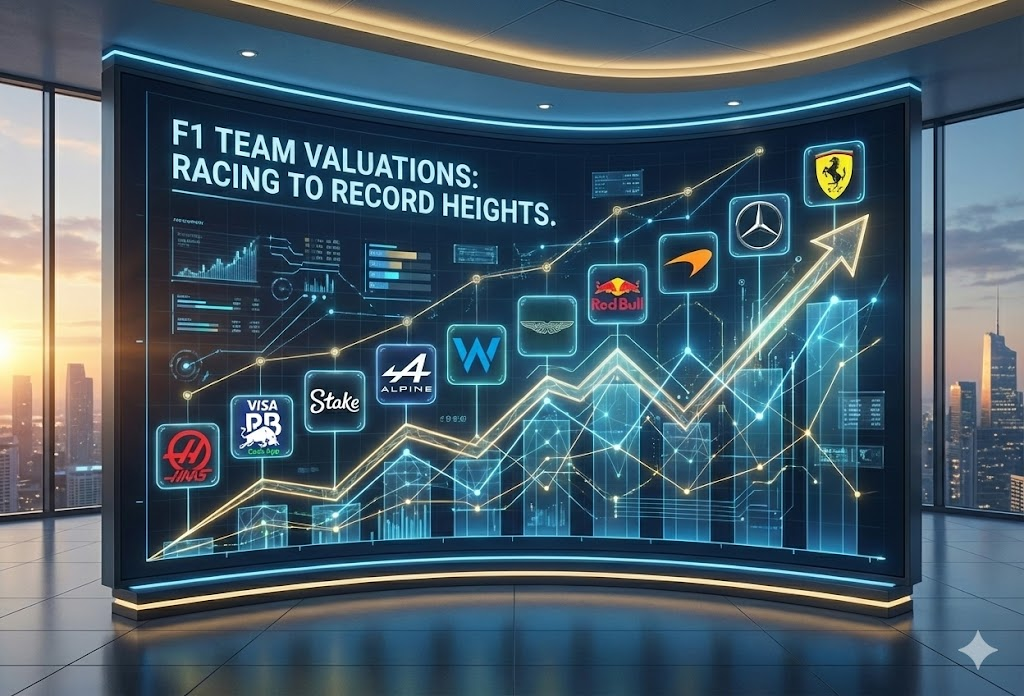
Racing to the Top: Formula 1 Team Valuations Soar to Record Heights
The high-stakes world of Formula 1 has not only been breaking lap records, it’s breaking financial records. In late 2025, a flurry of headline-grabbing deals and valuation reports revealed just how valuable the ten exclusive F1 franchises have become. Mercedes team principal Toto Wolff moved to sell a small slice of his team stake, implying a stunning $6 billion overall valuation for the Silver Arrows. Over the summer 2023, Hollywood actor Ryan Reynolds and partners bought into Alpine (Renault’s works team) at roughly a $900 million price tag. And according to Sportico’s latest analysis, the average Formula 1 team is now worth $3.42 billion, up 48% from a year prior and more than double the average just two years ago. In total, the ten teams combine for well over $34 billion in franchise value, a meteoric rise that places F1 teams among the most valuable properties in sports, behind only the NFL and NBA in average worth.
What’s driving this valuation boom?
In short, a perfect storm of factors has transformed Formula 1 from a niche motorsport into a global entertainment jugger-naut. New investors are racing to get in on the action, emboldened by structural changes that have made teams more profitable and by surging fan interest worldwide. The result is an F1 grid where even the smallest team (Haas) now carries a valuation of nearly $1.7 billion, roughly on par with a Major League Baseball franchise.
This feature explores the explosive growth in F1 team valuations, from the big-picture financial trends powering the surge, to the individual story of each team’s ascent (and the ownership twists along the way). We’ll also compare F1’s franchise values to those in other sports, illustrating how a once-insular European racing series became a trophy asset in the global sports industry.
From Niche Sport to Billion-Dollar Business: Liberty Media’s Financial Revolution
Formula 1’s valuation boom did not happen by chance or all at once, it’s the product of deliberate strategic changes since Liberty Media acquired the sport in 2017 for about $8 billion. Back then, F1 was often seen as a cash cow being milked dry by its previous owners, with fan interest stagnant and teams struggling under inequitable revenue agreements. Liberty Media, led by CEO Chase Carey (and later Stefano Domenicali, President of F1), set out specific plans to modernize and grow the business.
They invested in digital engagement and marketing, famously partnering with Netflix on Drive to Survive in 2019 to bring F1’s drama to new audiences. They also pushed F1 into new markets, adding races in the U.S. (Miami, 2022, Las Vegas, 2023) and negotiated a more equitable Concorde Agreement in 2020 that gave smaller teams a fairer share of revenues.
Crucially, Liberty has introduced a cost cap starting in 2021, limiting team budgets for car development to around $145 million in 2021, stepping down toward $135 million by 2023. For the 2024 Formula 1 season, the base cost cap was set at $135 million, which adjusted for calendar length and inflation would reach roughly $165 million, This cap curbed the rampant spending wars between manufacturers and helped mid-tier and backmarker teams move toward profitability.
The financial results have been striking. After a difficult pandemic year in 2020, when F1 revenue plunged with cancelled races, the sport’s finances have roared back impressively. Formula 1’s annual revenues have more than doubled from about $1.8 billion in the mid-2010s to a record $3.65 billion in 2024. The table below shows F1’s revenue trajectory, highlighting the 2020 dip and the strong post-2020 rebound:
Year
Total F1 revenue (US$ bn)
YoY change
Insight
2019
2.02
+11.0%
Stable pre-COVID season under Liberty
2020
1.15
-43.0%
COVID hit, shortened calendar, no crowds
2021
2.14
+86.6%
Recovery season, new Concorde Agreement
2022
2.57
+20.4%
Post-Netflix boom, attendance rebounds
2023
3.22
+25.2%
23 races, strong U.S. momentum
2024
3.65
+13.4%
Record year, 24 races, Las Vegas impact
2025e
4.04
+10.6%
Estimate based on trailing-12-month filings
The growth drivers are diverse. Media rights fees have roughly doubled from about $606 million in 2017 to $1.18 billion in 2024, as broadcasters pay top dollar for F1’s expanding viewership (fueled in part by Netflix’s success in attracting new fans). Race promotion fees from host cities have climbed as new venues (like Las Vegas) have joined the calendar, eager to pay enormous sums for the privilege. To say that global sponsorship is booming would be an understatement, as F1’s sponsorship revenue hit record levels by 2025, with top-tier brands like Oracle, Aramco, Rolex, and Heineken in the mix. In fact, total F1 sponsorship spending is projected at est.$2.9 billion in 2025. Liberty’s focus on fan experience (such as the premium Paddock Club hospitality) has also driven lucrative revenue streams.
Perhaps most important for team valuations, Liberty now distributes a slightly larger share of revenues to the teams as prize money, and does so more fairly. In 2024 the teams collectively received around $1.266 billion in prize payouts (up 4% from $1.15 billion in 2023). Technically, the prize distribution still rewards performance and history out of all things, for example, teams that finish in the top three or have won titles in the past decade get bonus payouts. Ferrari uniquely receives a historical bonus worth tens of millions. But the new system has decisively narrowed the gap between the top and “lowest” earners, and coupled with the cost cap, even the smaller teams can now for the very least break even or turn a profit. By 2024, six of the ten teams were profitable (and the ones still in the red were only slightly so). In 2024, for instance, Mercedes F1 posted an operating profit of about $202 million, leading the field, while even traditionally struggling teams like Williams and Alfa Sauber approached the breakeven mark.
Season
Total paid to teams (US$ bn)
Est. P1 payout (US$ m)
Est. P10 payout (US$ m)
Season insight
2023
1.27+
est. 140
est. 67
Red Bull champion season
2024
est. 1.33
est. 161
est. 69
McLaren champion season
2025e
modest growth expected
est. 186
est. 80
Payouts expected to grow with revenues
This sea change, from perennial team losses to widespread profitability, has fundamentally altered how investors view F1 teams. No longer are they vanity projects guaranteed to burn cash; under the budget cap era, an F1 franchise can be a cash-generating asset. With only ten available franchises (a number essentially fixed by the FIA, at least until an 11th team (Cadillac) joins in 2026), the laws of supply and demand kicked in, scarcity has made each team a hot commodity. Investor demand is far outpacing supply of teams, driving valuations higher each season
Red Bull dominant champions.
McLaren wins Constructors. Ferrari likely highest total earner due to historic bonus.
Teams as Trophy Assets: The Surge in Valuations (and How F1 Stacks Up Globally)
The convergence of booming league revenues, cost-controlled team expenses, and a fixed number of grid slots has pushed Formula 1 team valuations into overdrive. The numbers tell the story clearly: in 2019, analysts valued the average F1 team at roughly $500 million. By 2023, Forbes estimated that figure had climbed to $1.88 billion a 276% increase in just four years. Fast forward to late 2025, and Sportico now places the average team valuation at $3.42 billion, a dramatic jump from Forbes’ last official valuation in 2023. Put simply, the average team’s valuation has increased by nearly sevenfold in six years, a meteoric rise rarely seen in global sports.
The valuation table at the top of this report traces the same trajectory from 2023 through 2025, a steep acceleration over the past two seasons.
As the data shows, F1’s elite teams now reside firmly in the “billion-dollar club,” and several have shot well past the $4-5 billion mark. Ferrari, the sport’s most iconic name, is valued at around $6.4 billion, an all-time record for an F1 team. Mercedes is not far behind at $5.88 billion after its unprecedented run of championships in the 2010s. And thanks to a resurgence on and off the track, McLaren is now estimated at $4.7, having overtaken Red Bull for third-place in Sportico’s 2025 ranking. (McLaren’s valuation skyrocketed 203% in just two years, the fastest growth of any team, reflecting its improved competitiveness and a series of lucrative sponsorships and equity infusions, as we’ll explore later.)
Formula 1 Team Valuations, 2023 vs 2025 (2 year % growth)
Even the teams in the middle and back of the grid, outfits that not long ago were valued in the low hundreds of millions or less , are now worth over $2 billion or close to it. Aston Martin (formerly Racing Point/Force India) stands at est. $3.0 billion; Williams and Alpine (Renault) at about $2.1 billion each; AlphaTauri around $2.05 billion; Sauber (currently branded Stake, set to become Audi) at $1.8 billion; and Haas at $1.68 billion. To put that in perspective, Haas F1 would have been the fourth-most valuable team if you dropped it into the 2023 valuations, a sign of just how dramatically the bar has been raised across the board.
Four Core Forces behind the Valuations
A stronger, more profitable financial model: Under Liberty Media, Formula 1 has shifted from an inequitable, cost-intensive sport into a commercially disciplined enterprise. Revenues have surged, rising 25% year-on-year in 2023 and reaching a record $3.65 billion in 2024, while the introduction of the cost cap has made profitability achievable for almost every team on the grid. A more balanced revenue distribution ensures that even lower-ranked teams enjoy financial stability, which in turn gives investors confidence that their capital is entering a predictable, sustainable system.
This surge has elevated Formula 1 teams into the upper echelon of sports franchises globally. According to Sportico, the only leagues with higher average franchise values are the NFL and NBA. The average NFL team is worth around $7.1 billion, and the average NBA team about $5.5 billion. F1, at $3.4 billion average, now ranks ahead of Major League Baseball (MLB average est. $2.8 billion) and far above leagues like the NHL or elite European football (soccer) leagues on a per-team basis. In fact, Ferrari’s est. $6.4B valuation makes it more valuable than any MLB fran-chise and on par with the most valuable soccer clubs (such as Real Madrid or Manchester United valued at around $6 billion). It even edges out the top NBA teams in 2023 (the Golden State Warriors were valued around est. $7 billion, and the Lakers and Knicks around around $6–6.5B). Only the NFL’s top franchises (e.g. the Dallas Cowboys, valued at over $9 billion) clearly exceed Ferrari’s worth. In short, Formula 1 teams have become trophy assets in their own right, comparable to storied teams in the NFL, NBA, and European football in terms of market value.
The global cultural boom of Formula 1: Drive to Survive, U.S. race expansions, and blockbuster events like Las Vegas have redefined F1 as a mainstream cultural phenomenon. Teams today are more than racing entities, they are entertainment brands with global influence. Sponsorship demand has exploded accordingly. McLaren’s 53 commercial partners and record-breaking sponsorship revenue in 2023 illustrate how team identities now extend into merchandise, media, hospitality, gaming, and lifestyle marketing. The commercial reach of star drivers, celebrity investors, and social media engagement further amplifies each team’s global footprint, directly feeding into valuation growth.
Scarcity of supply and unprecedented investor demand: With only ten teams permitted to compete, F1 is one of the most exclusive sport franchise ecosystems in the world. This inherent scarcity has collided with intense investor appetite: private equity firms, sovereign wealth funds, Hollywood consortia, and multibillion-dollar manufacturers are all vying for a place on the grid. Transactions such as Mercedes’ implied $6 billion valuation or Alpine’s sale at a $900 million price point establish new benchmarks. Meanwhile, the sheer fact that Andretti–Cadillac must pay $450 million simply for the right to enter the series highlights how extraordinarily valuable an F1 slot has become even before a car turns a wheel.
Strategic positioning ahead of the 2026 era: The next regulatory cycle, combined with new power unit rules, has catalysed a wave of long-term strategic investments. Audi’s acquisition of Sauber, Ford’s partnership with Red Bull, and the entry of Andretti–Cadillac signal that major automotive and industrial players view F1 as a critical platform for future mobility, electrification, and global brand positioning. Teams are simultaneously investing heavily in new infrastructure, from Aston Martin’s $276 million factory to McLaren’s technology pipelines, they are strengthening the competitive prospects that future valuations will be built on.
Investor Gold Rush: Big Stakes and Blockbuster Deals
Behind the soaring valuations lies a series of high-profile investments and acquisitions in Formula 1 teams. Since 2020, numerous teams have changed hands or sold significant stakes at valuations that seemed unthinkable a decade ago. These deals both reflect and reinforce the teams’ rising worth; each new transaction tends to set a benchmark that pushes the next one even higher. Below is a summary of some major investment flows and team ownership transactions from 2020 to 2025, illustrating the gold rush into F1 franchises:
Transaction (team)
Date
Stake / value
Williams sold to Dorilton Capital
Aug 2020
100% of equity for $180M (approx. €152M); a full takeover keeping the famed Williams name on the grid
Sauber (Stake) to Audi
2022 (announced)
Audi initially agreed a 75% stake, later completing a 100% takeover of the Sauber Group (est. total value $650M)
Alpine (Renault) minority stake to RedBird / Otro
Jun 2023
24% sold for €200M (est. $218M), implying a $900M team valuation
Red Bull’s AlphaTauri takeover offer rebuffed
Mid 2023
Red Bull reportedly turned down offers above $1B for its junior team
Mercedes (Toto Wolff) stake sale
Nov 2025
Wolff sold around 5% of the team to investor George Kurtz, implying a $6B valuation
Andretti Cadillac expansion fee
2025 (pending entry)
Cadillac (Andretti Global), GM & TWG Global agreed a $450M anti-dilution fee for the 11th grid slot
Stake/Value Insights
Audi AG agreed to originally purchase a 75% stake. It later decided to acquire 100% for an estimate €650 million, rebranding the team as its factory effort by 2026. By November 2024, 30% was acquired by the Sovereign fund of Qatar.
24% stake sold for €200 million (est. $218M), implying a $900 M team valuation. U.S. investors RedBird Capital and Otro Capital (including Ryan Reynolds) injected Hollywood glamour and cash into the French team.
Red Bull reportedly turned down >$1 billion for its junior team AlphaTauri, signaling that any sale would require well into ten figures. (The team, rebranded as “Racing Bulls,” was valued est. $2.0B in 2025.)
Wolff sold around 5% of the Mercedes team (15% of his personal stake) to investor George Kurtz (CrowdStrike CEO), valuing the team at est. $6 billion. The sale netted Wolff an estimated $300M and set a record high valuation for an F1 outfit.
Cadillac (Andretti Global), GM & TWG Global agreed to pay a $450 million anti-dilution fee to join F1 in 2026. This huge entry cost underscores the value of a team slot and will be distributed among existing teams.
Each of these deals highlights the rapid inflation in team values. In 2020, the Williams family’s sale of their legendary but struggling team for under $200M marked the low point of F1 team valuations. Fast forward just a few years, and new investors are routinely valuing mid-pack teams in the billions. Alpine’s partial sell-off in 2023 was particularly telling at est. $900M for the whole team, it was nearly five times what Williams got back in 2020. And by 2025, Renault’s CEO was openly saying Alpine could be worth well above $1 billion as the team improves, which as we know now has become more than a reality. The Sauber/Audi deal showed how quickly valuations ramped up: in early 2021, American racing mogul Michael Andretti tried to buy Sauber (then racing as Alfa Romeo) for around $350M. His offer then was rejected. A mere 15 months later, Audi swooped in with an offer nearly double that price for a majority stake, as F1’s popularity and Sauber’s strategic value as Audi’s entry vehicle skyrocketed. The Racing Bulls offer rumored in 2023 (over $1B, reportedly from an American group) likewise signaled that even the “B-squads” were commanding for the very least 10-figure prices, which Red Bull’s owners deemed insufficient given the team’s potential integration with their main outfit.
Perhaps most symbolic was the Mercedes stake sale this year. Toto Wolff’s move to sell a small portion of his equity effectively priced the Mercedes F1 team at $6 billion, by far the highest “official” valuation ever attached to a team in Formula 1. For context, when Daimler (alongside former partner Aabar Investments) originally bought the Brackley-based team from Ross Brawn in 2009, the enterprise value was estimated at just over $150 million. Toto Wolff and Niki Lauda subsequently entered the partnership in 2013 to lead the team. Through unprecedented sporting success (eight straight constructors’ titles from 2014–2021) and savvy commercial growth, Mercedes is now worth roughly 40 times that original entry price. The team has been valued at a staggering $6bn after boss Toto Wolff sold a miniscule 5% share. The deal also surpassed a concurrent transaction in McLaren (where Bahrain’s Mumtalakat fund consolidated ownership) that had valued McLaren’s F1 team around est. $4.5B. The Mercedes sale underscored once more that top F1 teams are now level with NFL teams in valuation, a notion that would have seemed far-fetched just a few years ago.
It’s worth noting that the identity of team owners is also evolving as these transactions unfold. Private equity firms, ultra-high-net-worth individuals (UHNWIs), and even sovereign wealth funds are taking positions in F1 teams, drawn by the sport’s growth prospects. This is a definitive change from past decades when ownership was often the domain of automakers or racing enthusiasts (or both). Today, owning an F1 team is the equivalent of owning an NFL franchise. It’s a prestigious and potentially profitable investment and not simply a vanity project or part of a marketing stunt.
The Billion-Dollar Grid: Team-by-Team Breakdown
Each of the ten Formula 1 teams has traveled its own path to the lofty valuations we see today. Some teams have deep historic roots and brand cachet (Ferrari, McLaren, Williams) that add to their allure. Others are newer projects backed by ambitious billionaires (Red Bull, Aston Martin, Haas) or major manufacturers (Mercedes, Alpine/Renault, Sauber/Audi). Below, we delve into each team’s situation, highlighting current valuation, recent financial performance, and ownership/investment history in order to paint a more complete picture of Formula 1’s franchise landscape in 2025.
Yew Tree 62%, Arctos 14%, Accel & minorities 14%, HPS 10%
Williams
est. $2.14bn
est. $245m
est. -$36m
Dorilton Capital 100%
Alpine (Renault)
est. $2.08bn
est. $300m
est. -$13m
Renault 76%, Otro consortium 24%
Racing Bulls
est. $2.05bn
est. $318m
est. $5m
Red Bull GmbH 100%
Sauber (Audi)
est. $1.88bn
est. $240m
est. -$25m
Audi 70%, Qatar Investment Authority 30%
Haas
est. $1.68bn
est. $150m
est. $9m
Haas Automation 100%
Ferrari: The Prancing Horse Gallops Ahead
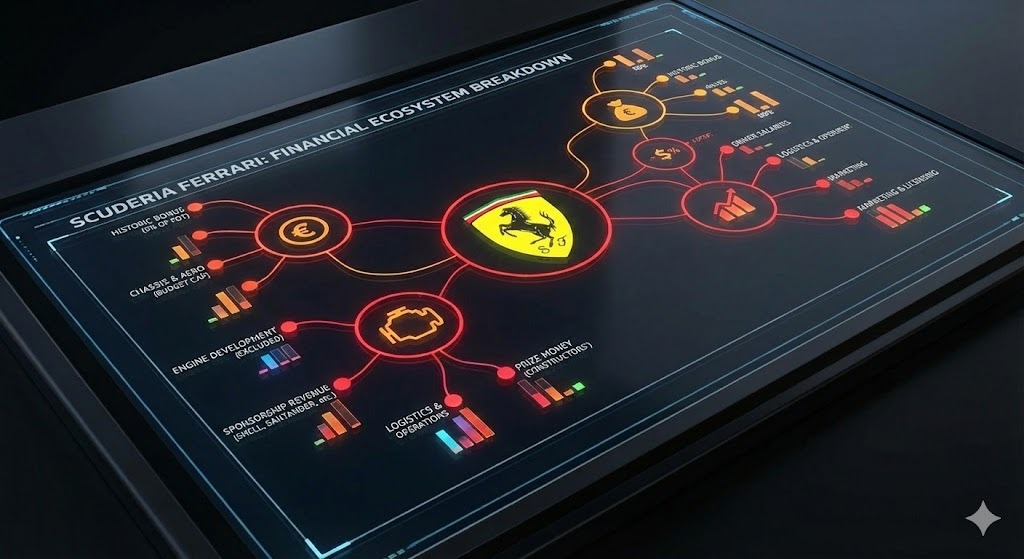
Recent Investments: Ferrari has not sold any team equity; it remains under the umbrella of the Ferrari/Exor corporate structure. Its value stems from brand and performance rather than external investment deals.
Ferrari is Formula 1 royalty. As the only team to compete in every F1 season since the original championship’s inception in 1950, the Scuderia’s heritage and identity is unmatched. This rich history pays dividends, literally, in Formula 1’s commercial scheme. Ferrari, in comparison to its competitors, receives an additional “long-standing team” bonus estimated around $100 million annually simply for its historical contribution to the sport. It’s no surprise then that Ferrari sits atop the valuation list: Sportico and Forbes both valued Ferrari around $6.4–6.5B in 2025, by far the highest of any team. Analysts as well as motorsport aficionados both point to Ferrari’s “near-mythic standing” in motorsport and its massive global following as key factors. The team’s brand power transcends F1 and synergizes with Ferrari’s luxury road car business (which within itself is a multi-billion-dollar public company). In essence, owning Ferrari’s F1 team means owning a piece of one of the world’s most recognized and revered symbols.
Financially, Ferrari has benefited from the new F1 boom while continuing to enjoy unique perks. The team’s revenues were estimated around $670 million in 2024, with an operating profit of about $80 million. That profit came despite on-track struggles in 2023–24, showing Ferrari’s commercial strength even in less competitive years. Thanks to the cost caps and strong sponsorships (Shell, Santander, Ray-Ban, etc.), Ferrari turned a est. $50M profit in 2022 as well. The team’s resilience also comes from its loyal “tifosi” fanbase and merchandising empire. It’s a fact, that Ferrari can monetize its name arguably better than any other team and or brand on this planet. And of course, the “Ferrari premium” in valuations is real. Investors covet it as a trophy asset, and Ferrari’s owners (the Agnelli family’s Exor group) have indicated the team is not for sale at any price.
Given its status, Ferrari hasn’t needed outside investment to spur its value, as its value grows organically with F1’s fortunes. The signing of superstar Lewis Hamilton for 2025 (in a bid to chase an elusive title) only added to Ferrari’s marketing muscle, even if results on track are still far of the original expectations. In short, Ferrari remains the crown jewel of F1, both competitively and financially, blending racing prestige with the might of a luxury brand – a combination that justifies its record valuation.
Mercedes: The Silver Arrows Strike Gold
Recent Investments: In 2020, petrochemicals giant INEOS acquired one-third of the team (roughly equal ownership with Daimler and Wolff) in a deal reportedly valuing the team near $1 billion. In 2025, George Kurtz bought est. 5% (of the team) from Wolff at a $6B valuation, which is a record-setting transaction.
Mercedes AMG F1 underwent one of the most remarkable transformations in sports business history. Starting from a mid-pack privateer (originally under the banner of Brawn GP in 2009) to a dynastic super-power in the 2010s. The team’s eight consecutive constructors’ championships (2014–2021) and global fan appeal (amplified by the “once in a generation” star driver Lewis Hamilton’s) have translated into formidable financial performance. For 2023, Mercedes was projected to lead all teams with a final $682 million in revenue, even outpacing the closest runner-up Ferrari. This was driven by a mix of huge sponsor deals and F1 prize money for consistently top results. Principal partner Petronas alone is extending a contract worth est. $75M per year, and other blue-chip sponsors like IWC, TeamViewer, and (recently) PepsiCo have added to the coffers. In 2024, Mercedes’s team revenues almost crossed $800 million (helped by an extra race and sponsorship upticks), and its operating profit was the highest in the paddock at $202M EBIT. Such profitability underlines why investors are willing to pay a premium for a stake in the Silver Arrows.
The ownership structure of Mercedes F1 is a case in point of F1’s new era. The team is one-third owned by the Mercedes-Benz parent company (Daimler AG), ensuring the automotive giant’s continued involvement. Another one-third is owned by team CEO Toto Wolff, who has been the architect of much of Mercedes’s success. The final third was sold to INEOS, the UK-based energy and chemicals conglomerate headed by Sir Jim Ratcliffe, in late 2020. That deal reportedly injected around $200M+ into the teams coffers (exact terms are undisclosed) and valued Mercedes around the billion-dollar mark at the time. Fast forward to 2025, and Wolff’s partial sale (of 5%) to tech billionaire George Kurtz values the team at a whopping $6B. Put differently, in five years the team’s implied valuation increased roughly seven-fold.
Wolff remains at the helm (the sale was carefully structured so that governance doesn’t change), and Mercedes-Benz has reassured its commitment to F1 long-term, which is significant as a factory-backed team with the resources of a Fortune 500 company behind it not only inspires but commands investor confidence. The combination of brand, success, and financial stability makes Mercedes one of F1’s most sought-after assets. Indeed, the $6B valuation grabbed headlines well beyond racing circles, as it surpassed the value of many NFL franchises and set a new benchmark for Formula 1. Little wonder Wolff quipped that despite the sky-high number, he believes F1’s growth isn’t done: “F1 is not at full potential” yet, he noted once, implying Mercedes (and others) could be worth even more in the future if the sport continues on its trajectory.
McLaren: Heritage Meets Growth Strategy
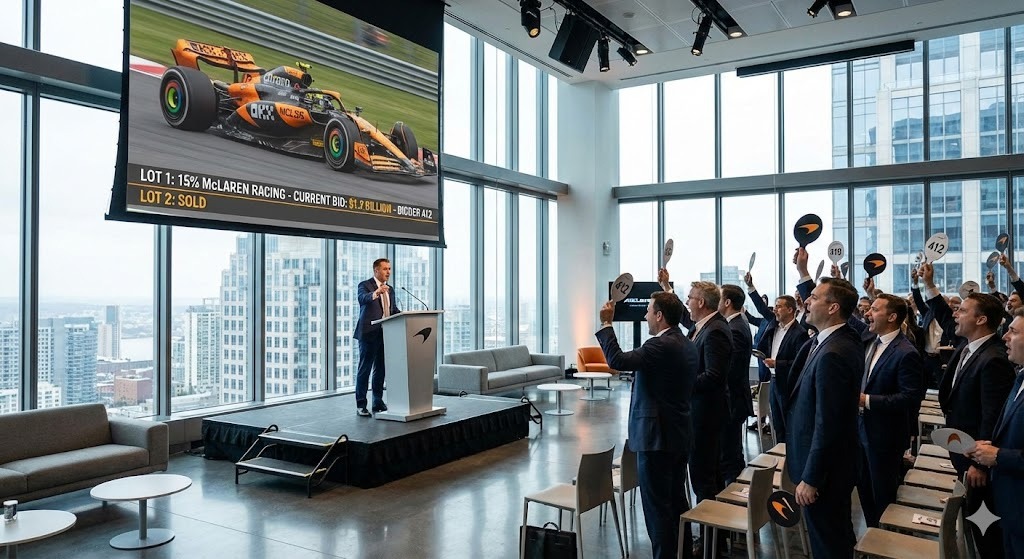
Recent Investments: Bahrain’s Mumtalakat Holding Company, McLaren’s long-standing strategic backer, strengthened its majority control of the McLaren Group through major recapitalisations and preference-share conversions between 2020 and 2024. At the racing-team level, the shareholder base shifted further when CYVN Holdings, an Abu Dhabi–backed fund, invested heavily in 2023 and expanded its stake in 2024, providing fresh capital and long-term stability for the team. MSP Sports Capital, which acquired an initial 15% of McLaren Racing in late 2020 with an option to rise toward 33%, eventually exited as part of the consolidation. Earlier minority investors, including Saudi Arabia’s PIF and Canadian businessman Michael Latifi, also withdrew as Mumtalakat and CYVN reshaped McLaren into a cleaner and more strategically aligned ownership structure.
That being said, McLaren is one of Formula 1’s most storied teams with 20 championships and roots tracing back to Bruce McLaren in the 1960s, but it entered the late 2010s in financial difficulty. The COVID-19 pandemic intensified these pressures, forcing emergency funding measures, asset sales, and the arrival of external investors. Under Zak Brown’s leadership, however, McLaren staged a commercial and competitive revival. By 2023 the team was winning races again, and in 2024 it captured its first Constructors’ Championship since 1998, driven by the youngsters Lando Norris and Oscar Piastri. The turnaround sharply increased prize money, visibility, and sponsor demand, lifting McLaren’s valuation from around $1.5 billion in 2023 to $4.73 billion in 2025, over 200% growth according to Sportico.
McLaren’s ownership transformation paralleled its resurgence. The team shifted from a boutique operation under Ron Dennis and TAG Group to a global enterprise backed by institutional investors. Mumtalakat, McLaren’s strategic anchor since 2007, consolidated its majority position through 2023–24 recapitalisations that eliminated vast debt and simplified governance. MSP Sports Capital’s 2020 investment added capital and U.S. market expertise, while CYVN Holdings’ major entry in 2023–24 injected further long-term funding for infrastructure and technological development. By 2025, with MSP and earlier minority investors exited, ownership centred around Mumtalakat (majority) and CYVN (significant minority), creating the team’s strongest financial foundation in decades.
McLaren’s results off the track have risen alongside its competitive return. The team generated roughly $490 million in revenue in 2023, and analysts estimate an operating profit of around $60 million in 2024, helped by its title success and the stabilising effect of the cost cap. Commercially, McLaren has become one of Formula 1’s strongest performers. By 2025 the team had secured 53 sponsors, the largest portfolio in the sport. These include a $100M+ per-year Mastercard title deal beginning in 2026, a multi-million dollar tier-one partnership deal with Google, and a $25M agreement with OKX. McLaren also capitalised on the rising profiles of Lando Norris and Oscar Piastri, while expanding into esports and IndyCar. Together, these moves helped reposition the team as a broader mobility-technology and lifestyle brand, rather than a traditional racing entrant.
With strong commercial power, stable ownership, and renewed competitive strength, McLaren has become one of F1’s most profitable and investable organisations. It is a dramatic reversal from the lean years of 2015–2017 and a key reason the team now ranks firmly among the top three most valuable franchises on the grid.
*Note: The ownership and financial figures presented for McLaren Racing are indicative estimates based on publicly available reporting, investment announcements, and industry analysis. McLaren has not disclosed the precise equity allocations held by Mumtalakat, CYVN Holdings, or former minority investors. The assumption that MSP Sports Capital may have exercised its option to increase its stake up to 33% reflects analyst expectations and contemporary reporting; likewise, the suggestion that CYVN subsequently acquired a comparable share is based on the scale of its disclosed investment. These estimates are provided for contextual understanding and should not be interpreted as exact or officially confirmed ownership percentages.
Distribution & Marketing GmbH / TC Agro Trading Company Ltd. / Fides Trustees SA
Red Bull Racing: A Champion’s Empire
Recent Investments: None. Red Bull’s F1 operations are fully owned by the Red Bull energy drink company (though it has occasionally explored selling its junior team). In 2023, Red Bull reportedly rejected a est. $1B offer for Alpha Tauri, and has instead committed to bringing in Ford as a partner for engine development post-2025.
If any team seems undervalued relative to its recent golden era, it’s Red Bull Racing. By the end of 2024, it had captured four consecutive Drivers’ titles with Max Verstappen (2021–2024) and two Constructors’ titles (2022–2023), cementing itself as the dominant force of the early ground-effect era. However, the team has faced stiffer competition recently, surrendering the Constructors’ crown to McLaren in both 2024 and 2025.”
One would potentialy expect Red Bull to sit on top of the valuation rankings, yet Sportico’s 2025 estimate of $4.32B places it only fourth, slightly behind McLaren. This may be in part be due to Red Bull’s corporate-owned model as the team functions as a marketing engine for the Red Bull brand rather than a traditional manufacturer or heritage racing team. Unlike Ferrari or McLaren, it lacks decades of independent motorsport history, and unlike Mercedes or Alpine, it isn’t backed by a major automaker, though it now builds its own power units.
Still, Red Bull has built an F1 powerhouse quickly: two teams, a renowned driver academy, and a cutting-edge Milton Keynes campus. Its valuation rose roughly 78% from 2023 to 2025, after Sportico pegged it at est. $2.4B in 2023. With 2023 revenue of nearly $510 million, Red Bull trades at roughly 8.5 times its income, a valuation that matches other top F1 teams
Red Bull’s entry into the sport was unconventional. Dietrich Mateschitz bought the struggling Jaguar team for a symbolic $1 in 2004, rebadging it as Red Bull Racing in 2005 and later adding a second team (Minardi/Toro Rosso) as a feeder. Long viewed as a spend-heavy branding play, Red Bull became profitable once cost caps and championship success aligned. Major sponsorships, including Oracle’s est. $300M/5-year deal and and Bybit’s est. $50M/year partnership (which ran through 2024), combined with the Red Bull media machine and Verstappen’s global star power pushed annual revenue past $500M by 2024.
Ownership remains stable. Red Bull GmbH, now controlled by Mateschitz’s estate and Thai partners, has shown no interest in selling the main team. Instead, it has doubled down by creating Red Bull Powertrains and partnering with Ford for the 2026 hybrid engine era. The more uncertain asset has been the sister team, AlphaTauri. Though rumors of a sale surfaced in 2023, Red Bull opted to restructure rather than divest, moving toward a rebrand and deeper technical integration with the senior team.
These valuations imply that if Red Bull ever spun off its F1 operations, they could rival or surpass those of Ferrari and Mercedes. For now, Red Bull prefers control, leveraging F1 dominance to boost its broader brand. As a highly efficient champion team with major tech investments and strong commercial momentum, Red Bull Racing is likely to keep climbing in value and remain a formidable force on and off the track.
Yew Tree Investments Consortium / HPS Investment Partners / Arcos Partners / Accell & additional minority backers
Aston Martin: Racing’s Rising Phoenix
Recent Investments: Canadian billionaire Lawrence Stroll led a group to buy the team (then Force India) out of administration in 2018 for for an estimate $117M. Since then, he’s invested heavily (new $267M factory) and brought in minority investors like Arctos Sports Partners and HPS Investment (in 2022) reportedly at valuations around $800M–$1B. Aston Martin’s F1 team value is now about $3B and Stroll has explored further investment at that level.
Aston Martin’s F1 team is arguably the grid’s most dramatic revival. Only a few years ago it was the bankrupt Force India outfit, collapsing under Vijay Mallya. Lawrence Stroll a fashion retail magnate and lifelong racing enthusiast stepped in mid-2018, paying $117M plus debts to rescue the team. Rebranded as Racing Point, it quickly rebounded on track (even winning a race in 2020). However, Lawrence Stroll pursued a far bigger vision, namely acquiring the Aston Martin luxury car company and relaunching the F1 team under its iconic name in 2021. The rebrand instantly boosted prestige, helping lure sponsors, engineers, and marquee drivers.
Modestly understated, the valuation surge has been extraordinary. Sportico placed the team at $1.08B in 2023, and Sportico’s 2025 ranking jumped it to $3.0B by 2025, one of the fastest climbs in F1. Several key forces drove this. Firstly, Stroll’s aggressive investment in talent (including Dan Fallows and, by 2025, Adrian Newey as a technical advisor); secondly, a £200M+ state-of-the-art Silverstone factory opened in 2023; thirdly strong on-track momentum, with multiple podiums in 2023 and lastly his aspirations for title contention by 2025–26. Commercially, big sponsors such as Cognizant, Aramco, Crypto.com, and Peroni expanded revenue streams. By 2024, the team generated est. $353M in revenue and only ran a small operating loss (est.$18M) expected for such a rapid-growth phase.
Furthemore, Stroll also welcomed minority investors, including Arctos Sports Partners in 2023 and HPS Investment Partners in September 2024, further strengthening the financial position of the team. The F1 operation now serves as a global marketing engine for Aston Martin’s road-car business, even as that company navigates its own volatility. By 2025 there were murmurs Stroll might even sell a portion of his position at a sky-high valuation, though until this day he remains firmly in control, with his son Lance and veteran star Fernando Alonso as the driver pairing.
With Newey expected to join as team principal in 2026, Aston Martin’s competitive outlook has grown even brighter than before. From bankruptcy to $3B in under a decade, the team has undoubtedly become a symbol of modern F1 economics. In a nutshell, it means that, with sufficient investment, branding power, and technical ambition, a once-distressed outfit can rise into the sport’s elite, both on track and in enterprise value.
*Note: The ownership percentages shown are indicative estimates based on publicly available reporting, investment announcements, regulatory filings, and industry analysis. Aston Martin F1 has not disclosed its full equity structure, and the precise share allocations among minority investors are not public. These figures should therefore be interpreted as informed approximations rather than exact representations of the team’s ownership distribution.
Williams: A New Chapter for a Founding Family Team
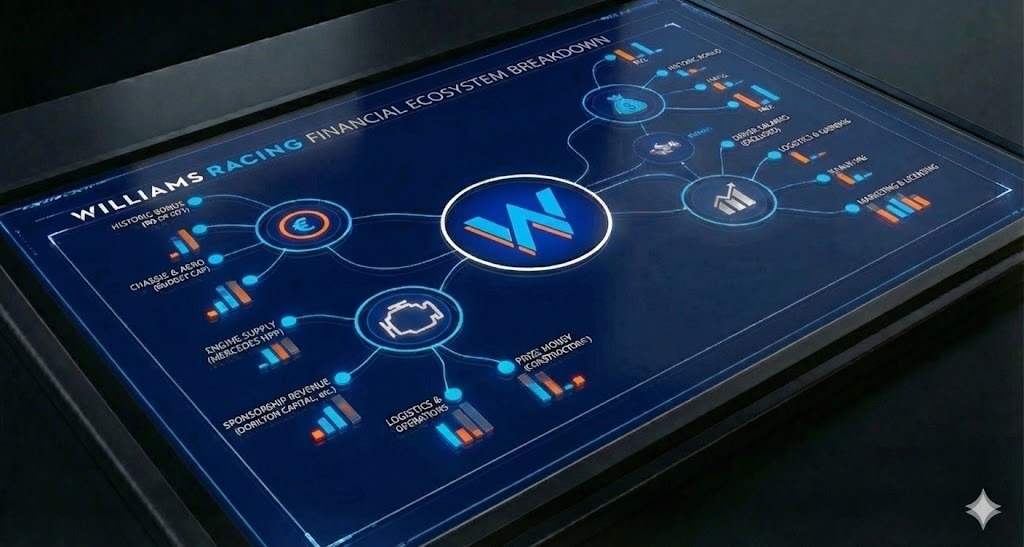
Recent Investments: Dorilton bought Williams Racing outright in 2020 for around $180 million, ending the Williams family’s ownership. Since then, Dorilton has invested in rebuilding the team. No new equity sales yet, but Williams’s value has risen more than tenfold under Dorilton’s stewardship.
Williams is one of Formula 1’s legendary names, but by 2020 the proud independent team had fallen on hard times. Founded by Sir Frank Williams, the team won nine Constructors’ Championships through the 1980s and ’90s, only to fade in the hybrid era and face financial collapse. In August 2020, burdened by debt and poor results, the Williams family made the difficult decision to sell. Dorilton Capital, a little-known New York investment firm, acquired the team for €152 M (about $180 M), including liabilities, a bargain price that reflected Williams’s precarious state (winless since 2012 and last in the standings in 2018–19).
Fast-forward to 2025, and Williams’s story is one of cautious rebuilding. Dorilton’s investment stabilised operations and enabled long-overdue modernisation. They refreshed leadership (Jost Capito in 2021, followed by James Vowles from Mercedes in 2023) and secured stronger sponsors, including U.S. software firm Atlassian as title partner in 2025. On-track results remain modest, but competitiveness and infrastructure have improved. The team’s valuation has surged to $2.14B per Sportico, an astonishing 12x increase from the 2020 sale, driven both by league-wide valuation growth and the enduring strength of the Williams brand, which Dorilton wisely chose not to rebrand.
Financially, Williams still operates near the back of the grid. Estimated revenues in 2023 were est. $169M, among the lowest in F1, with prize money and sponsorship making up most of the total. Dorilton has continued to inject capital for facilities and technical expansion. The cost cap has been a lifeline, allowing Williams to compete without being over-whelmed by spending wars; the challenge now is maximising performance within a fixed budget and growing commercial income. The team has expanded its sponsor roster with brands like Gulf Oil, while deepening its technical partnership with Mercedes for key components.
Dorilton’s long-term strategy appears to be building competi-tiveness and asset value before considering an exit or major investor. With a current valuation above $2B, their $180M acquisition looks exceptionally well-timed. Yet realising that value would require a buyer, and Dorilton has shown no urgency to sell suggesting they expect further upside as F1 continues to grow.
Williams remains one of the sport’s last true “independent” heritage teams, a narrative that resonates with fans and brands alike. If it can return to consistent points or attract a major manufacturer partnership, its valuation could climb even further. For now, Williams stands as a case study in how a distressed F1 team in 2020 became a billion-dollar property by 2025, entering a new era defined by financial stability and steady progress rather than survival.
Renault Group / Otro Capital Consortium (RedBird Capital Partners, & Maximum Effort Investments)
Alpine: The French Team Finds New Allies
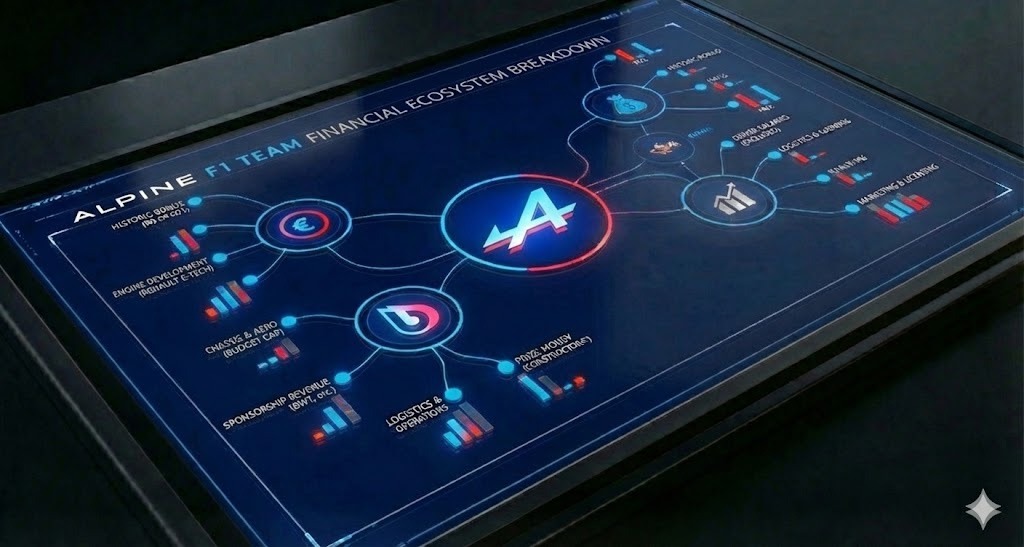
Recent Investments: In June 2023, a consortium lead by Oltro Capital, including RedBird Capital Partners (U.S. private equity) and Ryan Reynolds Maximum Effort bought 24% of Alpine F1 at an estimated $900 M valuation. Renault retains control with 76%. The investment brought funding and Hollywood cachet to the team.
Alpine is de facto Renault’s factory team, operating from Enstone in the UK. Over the decades it has raced under several identities, including Benetton in the ’90s, Renault in the 2000s (winning titles with Alonso), Lotus in the early 2010s, and back to Renault in 2016 before being rebranded, yet again, as today’s Alpine F1 Team in 2021 in order to promote Renault’s performance brand. As a manufacturer-owned outfit, profitability was never the core objective; Renault viewed F1 as a marketing and technology platform. But with shifting financial dynamics, even Renault recognised the value of external investment.
The 2023 sale of 24% of the team to RedBird Capital and Otro Capital was a turning point. The €200M infusion valued Alpine at about $900M, despite middling results and internal leadership turmoil. The investor group, which included Ryan Reynolds, Rob McElhenney, and Michael B. Jordan, brought both capital and cultural cachet. The move quickly appeared justified: Forbes later suggested Alpine could fetch $1.4B, and by late 2025 Sportico valued the team at $2.08B, rising in tandem with the broader surge in F1 team valuations.
Renault’s partnership with the new investors is strategic. The added funding supports upgrades at the Enstone chassis base, while the celebrity ownership group boosts Alpine’s visibility and marketing reach, similar to the Wrexham effect in football. Although Alpine struggled on track in 2024–25, the investors supported the difficult decision to transition away from being a full works manufacturer, aiming to cut costs and improve competitiveness by becoming a customer team in 2026.
“For Renault, selling a minority stake reduced operational burden while keeping the Alpine name prominent. In a major strategic shift finalized in late 2024, Alpine decided to shut down its Renault engine program at Viry-Châtillon to become a customer team (using Mercedes power from 2026). While they lose the ‘works’ status, this move significantly reduces operating costs and arguably increases the team’s appeal to investors by removing the burden of engine development. For now, Alpine sits firmly in the midfield commercially, buoyed by the market’s rise and a unique blend of industrial and celebrity ownership.
Sauber (Audi): From Privateer to Premium Manufacturer
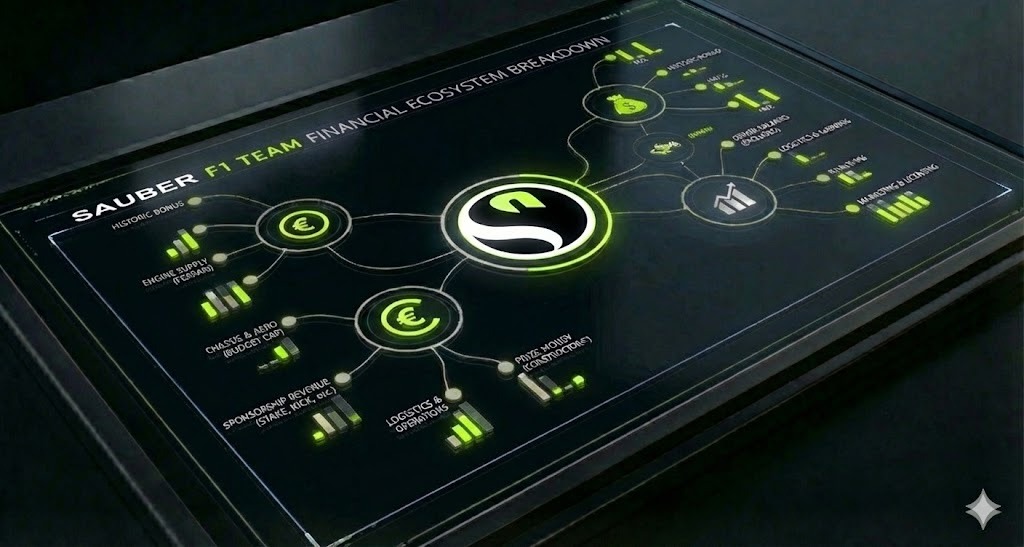
Recent Investments: Audi initially agreed to acquire a 75% stake, but in March 2024 accelerated its plans to complete a 100% takeover of the Sauber Group (est. total value $650M). To boost capital for the 2026 factory launch, Audi sub-sequently sold a significant minority stake (approx. 30%) to Qatar’s sovereign wealth fund (QIA) in November 2024. The team (currently competing as Stake F1 Team Kick Sauber) will become the official Audi Works Team in 2026.
Sauber is in the midst of a profound transformation. Founded by Peter Sauber as a long-standing privateer, the team briefly became BMW Sauber from 2006–2009 before returning to independence and eventually being sold to Longbow Finance in 2016. From 2018 to 2023 it raced under the Alfa Romeo banner through a naming-rights deal, which ended after the 2023 season. For 2024–25, the team rebranded as Stake F1 Team Kick Sauber, the final interim identity before Audi’s arrival.
Audi initially planned a staged buy-in but shifted to a full 100% acquisition in early 2024, then sold a 30% minority stake to Qatar’s QIA, securing additional long-term funding. This combination of manufacturer backing and sovereign investment has dramatically reshaped Sauber’s valuation outlook. When Andretti attempted to acquire the team in 2021 for $350M, Sauber was thought to be worth around $500M. Today, with Audi’s entry confirmed and F1 valuations soaring, Sportico values the team at $1.88B. QIA’s late-2024 investment added further financial weight and commercial ties, including the “Visit Qatar” partnership.
On track, Sauber has been navigating a transition period from 2023–25, working with modest funding while preparing its infrastructure for Audi’s factory program. Revenues remain on the lower end, but from 2026 Audi is expected to fund the operation to the cost-cap ceiling and deliver full works-team resources. As a result, Sauber’s valuation is widely expected to rise again once the Audi era officially begins.
Sauber’s evolution from an independent Swiss team into a major manufacturer-backed entrant captures the new economics of F1. Its $1.88B valuation reflects not only its current platform but also the anticipated value of the Audi project. Remarkably, this surge has occurred without recent podiums. It seems that the promise of a premium manufacturer and sovereign partnership alone has been enough to propel Sauber firmly into the upper tier of team valuations. As 2026 approaches, Sauber’s transformation into Audi F1 is nearly complete, positioning it to become one of the grid’s best-capitalised and most strategically supported operations.
AlphaTauri (Red Bull’s “Racing Bulls”) – The Billion-Dollar Junior Team.
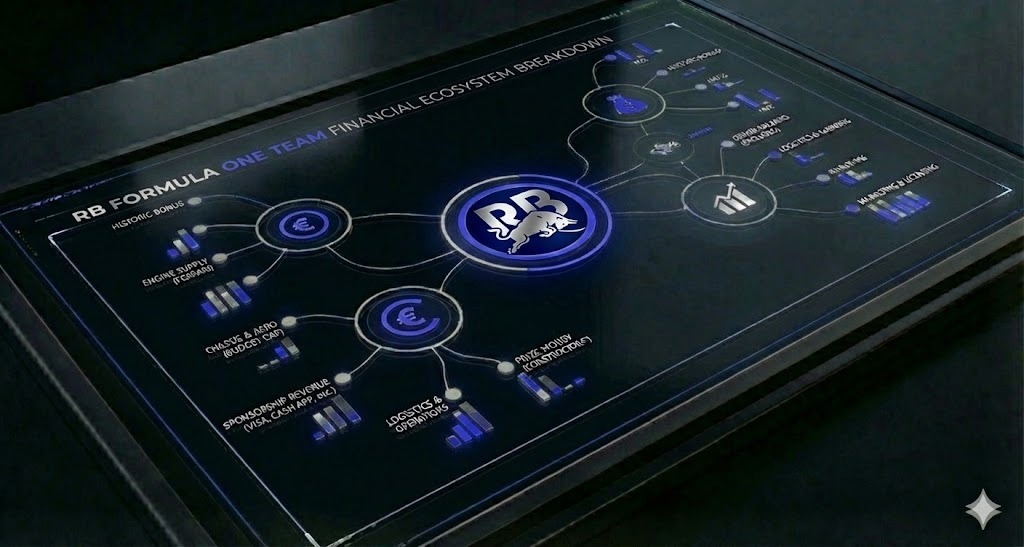
Recent Investments: None sold; considered for sale/rebrand in 2023–25. Red Bull reportedly rejected offers exceeding $2 billion for the team. In 2024, the team was restructured and renamed Visa Cash App RB (often referred to as “Racing Bulls”) to align closer with Red Bull Racing, with a Ford partnership on engines confirmed from 2026.
AlphaTauri began life as Minardi, a beloved small Italian team, before Red Bull purchased it in 2005 to serve as a junior squad (originally Toro Rosso). For most of its existence, it has functioned as Red Bull Racing’s development arm, running on a modest budget, nurturing young talent (including Sebastian Vettel, who famously won for Toro Rosso in 2008), and relying heavily on shared components. Rebranded as AlphaTauri in 2020 to promote Red Bull’s fashion label, the team never gained major commercial traction, and by 2023 the branding had run its course.
With rising costs and early on-track struggles, though a late surge saw the team recover to 8th place in 2023, Red Bull initiated a major overhaul. Franz Tost retired, and new leadership (Laurent Mekies and Peter Bayer) was installed. Red Bull also announced a rebrand and deeper technical integration with Red Bull Racing from 2024 onward to improve competitiveness and efficiency. New commercial deals followed, including major partnerships with Visa and Cash App, leading to the “Visa Cash App RB” identity launching in 2024.
Speculation around a sale intensified in 2023 when Red Bull reportedly rejected an offer exceeding $1B. Insiders suggested the team’s true asking price was closer to $1.5–2B, a range validated when Sportico later valued the team (now Racing Bulls) at $2.05B in 2025. For now, Red Bull appears inclined to retain the team and enhance its value through rebranding and improved performance. With Ford joining as Red Bull’s power-unit partner in 2026, the team stands to benefit from technical and commercial spillover as well.
Historically the team operated on a lean budget ($120–150M at times), but under the cost cap it can spend up to roughly $145M if funded and Red Bull seems more willing to support it. The team even posted a small estimated profit of around $5M in 2024, signalling operational efficiency. While some may find a $2B valuation high for a “B-team,” it reflects both the scarcity of F1 entries and the value of its technical synergy with Red Bull. If Red Bull ever chose to sell, multiple buyers would line up, from Andretti to potential Asian manufacturers.
Today the team is evolving from a pure feeder squad into a more commercially viable and competitive operation. Its billion-dollar valuation underscores just how dramatically the economics of F1 have changed: even Red Bull’s second team, once a fringe player, is now a major asset. Together, Red Bull’s two teams are valued at more than $6.3B, an extraordinary return on what began as an energy drink company’s racing experiment.
Haas Automation, Inc.
Haas Automation, Inc.
Haas: A Small Team, Big Ambitions (and Valuation)
Recent Investments: None. Haas remains solely owned by Gene Haas, who founded the operation in 2014 (debuting in 2016). While the team stabilized its finances with a 3-year MoneyGram title sponsorship ($20M/yr, 2023–2025), it secured a major strategic future by announcing Toyota Gazoo Racing as its new title partner starting in 2026.
Haas F1 Team, which debuted in 2016, is the grid’s newest outfit and the first American-owned team in decades. Gene Haas built it on an unconventional model, namely; outsource extensively (chassis support from Dallara, engines and major components from Ferrari) to compete cost-effectively. The approach paid early dividends. Haas scored points in its first race and finished 5th in the 2018 Constructors’ Championship. But financial setbacks followed, including the collapse of the Rich Energy sponsorship in 2019 and the loss of Uralkali in 2022 due to sanctions. For several seasons the team survived largely through Gene Haas’s funding and prize money.
Under today’s cost cap, however, Haas’s lean structure has become an advantage. With modest overhead and a small workforce, it competes closer to the cap without major inefficiencies. Meanwhile, the explosion in franchise valuations has made Haas’s initial est. $100M entry cost look visionary. Astonishingly, the team is now valued at $1.68B despite no podiums and only a handful of top-five finishes in its history. Sportico noted that this 2025 valuation “would have placed them fourth overall in 2023,” highlighting how dramatically the market has shifted.
Commercially, Haas secured a major boost with MoneyGram’s title sponsorship in 2023, worth around $20M per year. This stability paved the way for a landmark deal announced in late 2025. However, starting in 2026, Toyota Gazoo Racing will replace MoneyGram as title partner, bringing factory-level technical resources. Combined with Ferrari-supplied parts and a small staff count (approx. 330 employees versus 800+ at top teams), the operation runs efficiently and has even posted profits in recent seasons. The surge of U.S. interest in F1 has also strengthened Haas’s attractiveness. As the only American team (Until the upcoming Cadillac entry), it could command a premium if Gene Haas ever entertained a sale. Michael Andretti reportedly explored buying the team in past years, but Haas has maintained he is not selling.
Competitively, Haas still faces the challenge of moving up the grid, and is investing gradually in more in-house development. Financially, though, the team is in a strong position. With zero debt, stable backing, and a valuation that has multiplied many times over. What began as a “lean survival” project has become a billion-dollar franchise, a symbol of how F1’s new economics can elevate even the smallest teams.
A New Era of Growth and Opportunity
In the span of just five years, Formula 1’s team economy has undergone a radical transformation. What was once a paddock of haves and have-nots has matured into a balanced and profitable ecosystem where every franchise commands significant value. The introduction of cost caps and fairer revenue distribution, combined with Liberty Media’s aggressive marketing push, unlocked the business potential many long suspected F1 possessed. The results are now undeniable: record-breaking valuations, a rush of institutional capital from Hollywood to Wall Street, and teams positioning themselves as multi-billion-dollar sports properties on par with NFL dynasties and top-tier European football clubs.
The recent flurry of deals hints at the road ahead. With an 11th team (Andretti Cadillac) slated to join in 2026 after agreeing to a $450M anti-dilution fee, F1 is carefully managing expansion to protect the scarcity value driving up prices. The next Concorde Agreement (2026–2030) is expected to further increase teams’ revenue shares and potentially unlock new income streams, from higher U.S. media rights to revised prize structures. Teams are already maneuvering for this future witness Mercedes locking in long-term partners like PepsiCo, Red Bull aligning with Ford, and heavyweights Audi and Cadillac entering the fray.
Challenges remain, of course. The macroeconomic environment, the capital cost of the 2026 technical regulations, and questions about sustainability all loom large. Teams must continue to balance on-track performance with business considerations; an F1 championship is still won with innovation and talent, not just a balance sheet. Yet, with financial stability largely secured, the grid is arguably healthier than ever. Even teams that once teetered on the brink of collapse like Williams and Sauber are now well-capitalized with optimistic futures.
For the sport’s stakeholders, Liberty Media, the FIA, and the teams, the priority will be sustaining this momentum responsibly. Maintaining competitive balance, so that new investment doesn’t simply equate to a new monopoly, is vital to keeping fans engaged and sponsors committed. There is also the human factor: valuations may be sky-high, but F1 remains an intensely competitive sport. These immense price tags create pressure to perform, ushering in an era of heightened professionalism and lower tolerance for failure, evidenced by the carousel of team principal changes we have seen from 2022 through 2025 as investors demand better ROI.
All told, Formula 1 has entered a virtuous cycle of growth. Higher popularity drives revenue, which increases franchise value and investment in racing, which in turn attracts more fans. It is a cycle other major leagues have enjoyed for years, and F1 is now firmly on that trajectory. A decade ago, the notion of an F1 team worth $6 billion would have been dismissed as fantasy; today it is reality, with Ferrari and Mercedes setting the benchmark. Crucially, every team, even those without recent titles, is now a billion-dollar property, providing the security to plan for the long term.
As the sport heads into the 2026 regulatory era, its central challenge will be managing success: keeping the racing compelling, expanding the grid without diluting prestige, and continuing to innovate in entertainment, whether through immersive storytelling or Las Vegas-scale spectacles. If the sport executes well, seeing valuations touch $10 billion within the next decade no longer feels unrealistic.
At Vinciamo Sports, we view this moment as a unique intersection of competition, capital, and culture. Formula 1 is no longer just a battleground for engineering excellence; it has matured into one of the world’s most dynamic sports-business ecosystems. The race for championships will always define the drama on track, but the race off it, for investment, innovation, and strategic growth, is one that every team is now equipped to contest. For stakeholders, investors, and partners alike, the opportunity ahead has never been greater.
Sources & Content
The information and quotes in this article are drawn from reputable sports news and industry sources and official statements found online. Reactions from individual figures were cited from offical public media. Comments and financial figures including valuations, revenues, operating profits were reported from public sources, amongst other Sportico, Sportspro & Forbes, as well as Liberty Media Corporation Annual Financial Reports. These sources provide a basis for analyzing the valutions change and its implications for the industry. AI-paraphrasing and generation of visuals has been applied. Logos were shown for editorial purposes only. No affiliation implied.
Disclaimer
This article is intended for informational and analytical purposes only. The views expressed reflect professional interpretation and opinion based on publicly available information at the time of writing. While every effort has been made to ensure accuracy, Vinciamo Sports makes no guarantees regarding the completeness, timeliness, or reliability of the data presented. This content should not be regarded as financial, legal, or strategic advice, and Vinciamo Sports accepts no liability for decisions made based on this material.
The full data edition of this report is also available as a PDF download in our Insights Library.
A. Strulak writes on sports business, commercial strategy and the economics of rights. Vinciamo Sports, Sport. Reimagined.